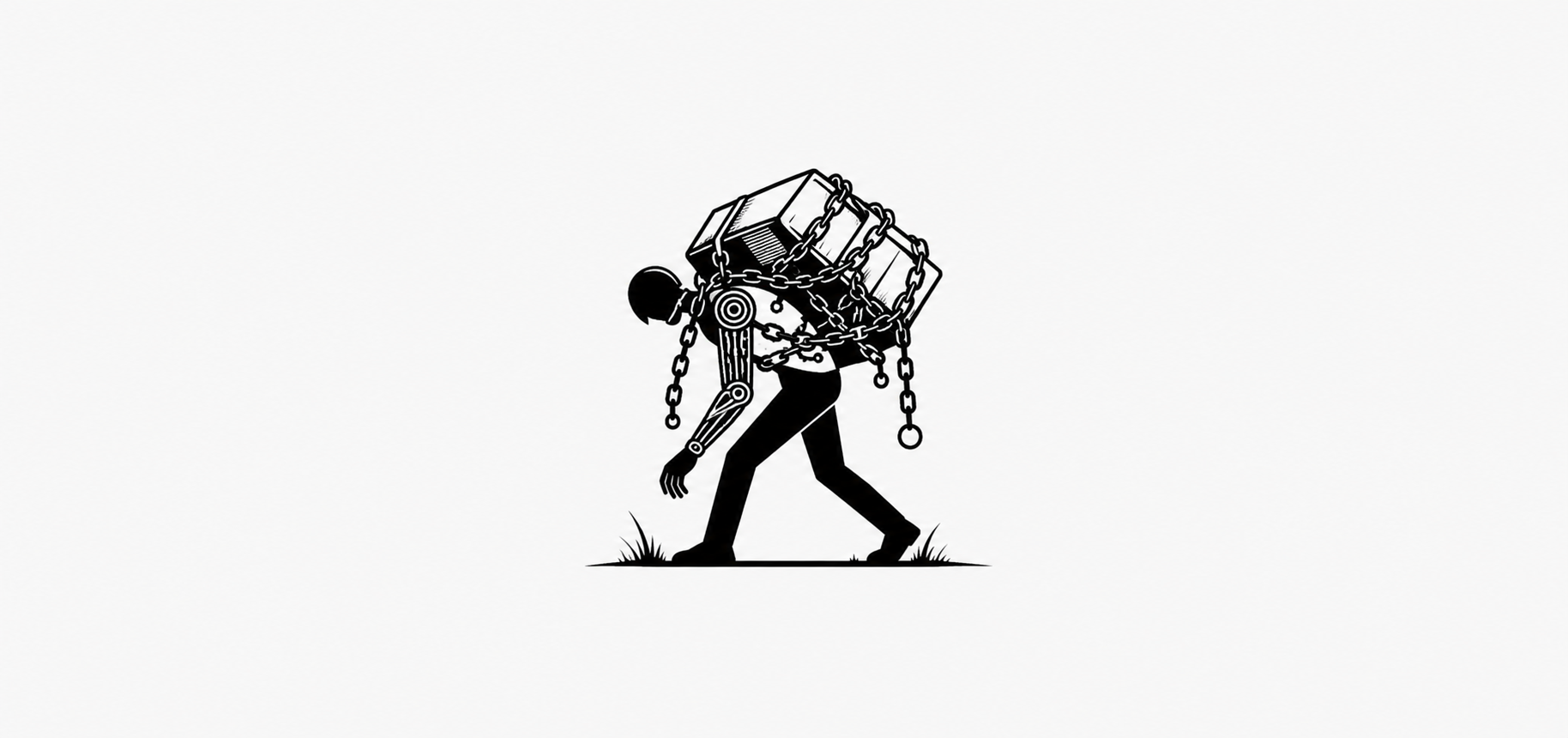
Technical Debt Management Strategies

Technical debt accumulates in every codebase that ships under time pressure — which is every codebase. The term gets used loosely to mean anything from outdated dependencies to architectural decisions that made sense in 2018 and cause pain today. The distinction that matters is between debt you took deliberately with a plan to repay it and debt you discovered when something broke.

Recognition is the first problem. Debt that lives in a single module is manageable. Debt that has spread across service boundaries because every new feature was built on top of the existing structure instead of fixing it first is a different situation. The articles here cover how to identify where debt is concentrated, how to measure its actual cost in delivery slowdown and incident rate, and how to distinguish debt worth repaying from debt that should be managed in place.

Visualization matters because technical debt is invisible to everyone except the engineers who work with it daily. Stakeholders who control roadmap priorities cannot weigh debt repayment against feature delivery if the debt has no visible representation. The articles cover techniques for making debt tangible — metrics, diagrams, cost estimates — without turning it into a political exercise.

Reduction without stopping delivery is the practical constraint. Dedicated refactoring sprints that pause feature work are a pattern that organizations approve once and abandon after the first scheduling conflict. Sustainable debt reduction happens incrementally, embedded in normal delivery cycles. The articles address strategies for systematic reduction: strangler fig patterns, seam-based refactoring, and how to sequence debt work so that each increment delivers visible improvement rather than rearranging complexity.

247 Strangers Have Root Access to Your Production

247 Strangers Have Root Access to Your Production

Your organization has a thorough vendor approval process. Procurement forms. Security questionnaires. Legal reviews lasting months. Then your developers run npm install and pull 247 packages from strangers on the internet—and nobody blinks. That’s the supply chain security paradox most teams live with daily. This guide shows you how to implement Dependabot, dependency review, and SBOM generation as the defensive controls they should be—not as checkbox compliance theater.
Real Professional Software Engineering in the AI Era

Real Professional Software Engineering in the AI Era

Throughout this series, we’ve established that AI-generated code without understanding creates productivity illusions that collapse in production (Part 1), and that the feedback loop between code and reality—compilation, testing, profiling, production—sharpens thinking in ways AI can’t replicate (Part 2). Now we confront the practical question: What defines professional software engineering when code generation becomes trivial? This final part examines the irreplaceable skillset: understanding execution characteristics (recognizing allocation patterns that cause GC pressure before deployment), asking questions AI can’t formulate (What’s the failure mode when this service is unavailable?), recognizing when plausible AI solutions diverge from correct ones, debugging production failures AI has no execution model to reason about, and evaluating maintainability for code that becomes tomorrow’s burden. We explore why prompt engineering optimizes for speed while architecture optimizes for survival, why “AI productivity” often means faster technical debt accumulation, and why the economic reality favors organizations that measure system reliability over lines of code generated. The feedback loop can’t be automated because closing it requires learning from production failures and applying that knowledge to prevent future ones—the irreplaceable discipline that defines real professionals in 2026 and beyond.
Stoßlüften: The Architecture of Intentional Resets

Stoßlüften: The Architecture of Intentional Resets

A Swabian habit teaches a DevOps lesson: open windows fully and often, or invisible decay accumulates. Stoßlüften isn’t about comfort—it’s about forcing systems to prove they’re healthy. Regular restarts, infrastructure-as-code, and reproducibility checks catch the problems that green metrics miss.
The Feedback Loop That AI Can't Replace

The Feedback Loop That AI Can't Replace

In the first part of this series, we established that AI-generated code without understanding creates an illusion of productivity that collapses under production load. The differentiator isn’t typing speed—it’s the feedback loop where code meets reality and exposes incomplete thinking. But what exactly is this feedback loop, and why can’t AI replicate it? Modern compilers validate logical consistency, catching gaps pure thought leaves unresolved. Profilers expose the 75x performance difference between “seems reasonable” and “actually performs.” Production environments reveal every assumption abstract thinking deferred—scale, concurrency, failure modes. This article explores the mechanisms that transform vague reasoning into concrete understanding: compilation validates logic instantly, testing catches behavioral mismatches, profiling measures what abstract analysis guesses, and production exposes the cost of every deferred decision. Real professionals don’t just write code—they master the iterative discipline of watching it fail, understanding why, and refining their thinking. AI participates in parts of this loop, but it can’t close it. That’s where professionals remain irreplaceable.
Kehrwoche: What Swabian Cleaning Teaches About Technical Debt

Kehrwoche: What Swabian Cleaning Teaches About Technical Debt

Kehrwoche—a Swabian cleaning tradition—is scarier than breaking the build on Friday afternoon. At least the build doesn’t remember next Tuesday. Mrs. Schmid from the second floor does, and she remembers well. What does a weekly cleaning schedule in southern Germany have to do with technical debt? More than most software teams want to admit.
Why Real Professionals Will Never Be Replaced by AI

Why Real Professionals Will Never Be Replaced by AI

The elephant everyone ignores: AI can generate code faster than you can type. GitHub Copilot autocompletes entire functions. ChatGPT builds APIs from prompts. Typing is dead. So why will real professionals never be replaced? Because “vibe coding”—describe what you want, ship what AI generates—is a productivity illusion that collapses spectacularly in production. When code generation becomes trivial, understanding what that code costs, where it fails, why it breaks under load becomes everything. AI generates syntax. Professionals understand execution, failure modes, operational cost, and production consequences. The differentiator isn’t typing speed—it’s mastering the feedback loop: write code, watch it fail, understand why, refine thinking. This discipline can’t be automated. Prompt engineers generate code. Real professionals ensure it survives contact with reality.
Most Software Teams Are Lying to Themselves—2026 Needs to Be Different

Most Software Teams Are Lying to Themselves—2026 Needs to Be Different

Happy New Year 2026! 🎉

Fix one piece of technical debt this week—not next quarter. .NET 10, analyzers, and tests are ready; discipline is the only missing part.

2025 in Review: The Year .NET Stopped Lying to Itself

2025 in Review: The Year .NET Stopped Lying to Itself

Forget the hype—2025 was when .NET tooling finally stopped pretending complexity doesn’t exist Three tools won by being honest: Aspire exposed topology, TUnit killed flaky tests, Testcontainers made infrastructure real
.NET 10: Timing Is the New Technical Debt

.NET 10: Timing Is the New Technical Debt

2025 reshapes the .NET ecosystem with faster release cycles and shared responsibility. Discover why migrating to .NET 10 by Q1 2026 — and supporting your dependencies — turns timing into sustainable ROI.
Your Tests Are Lying — Mutation Testing in .NET

Your Tests Are Lying — Mutation Testing in .NET

It begins like many stories in software: a well-intentioned developer joining a project, determined to do things properly. You arrive at a codebase that has grown organically, perhaps even chaotically. You decide you will bring order. You set up unit testing, you configure continuous integration, you measure code coverage. You write dozens or hundreds of tests. Every public method is touched, every branch is at least executed. The dashboard lights up green. You feel, quite frankly, on top of things.

Then one day, production breaks under your watch

PackageDownload: NuGet's Forgotten Power Tool

PackageDownload: NuGet's Forgotten Power Tool

PackageDownload arrived in NuGet 4.8 to solve a niche but genuine problem: downloading packages without adding assembly references. It works. But its version syntax requirements and complete disregard for Central Package Management reveal the messy reality of platform evolution.
Clean Code: A Lip Service, Not a Standard

Clean Code: A Lip Service, Not a Standard

Clean Code is often praised but rarely practiced effectively. This article explores how misunderstood ideals and over-engineering harm .NET systems, how to recognize such failures early, and which C# best practices and official guidelines truly support maintainable software.